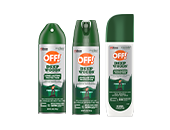
OFF!® Deep Woods®
Enjoy long-lasting mosquito protection for long-lasting outdoor fun. These products available with both DEET and Picaridin are ideal for long walks in heavily wooded areas.
View all products
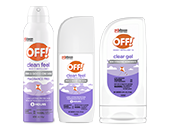
OFF!® Clean Feel
OFF!® Clean Feel provides non sticky & fragrance free protection from mosquitoes, ticks, and biting flies. Formulated with Picaridin, feels good on skin, & up to 8 hours of mosquito protection, so you can feel confident using OFF!® Clean Feel bug repellent every day.
View all products
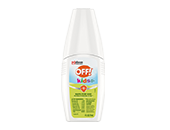
OFF!® Kids
OFF! Kids Mosquito Spray provides up to 90 minutes of protection. This formula is natural and plant-based. With no added fragrance or dyes, it’s protection you can count on for Kids 6 months & up.*
*When used as directed.
View all products
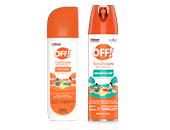
OFF!® FamilyCare
Enjoy mosquito protection for the whole family. With OFF!® FamilyCare and FamilyCare with Picaridin you can take a hike through Mother Nature's backyard or simply enjoy a stroll through your own.
View all products
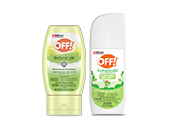
OFF!® Botanicals®
OFF!® Botanicals® is a plant-based mosquito repellent*, with an active ingredient chemically synthesized from pine oil extract.
*Active ingredient chemically synthesized from pine oil extract
View all products